
Watch the full episode in the player above — everything in this article comes straight from the episode.
Prefer audio? Listen to the podcast version:
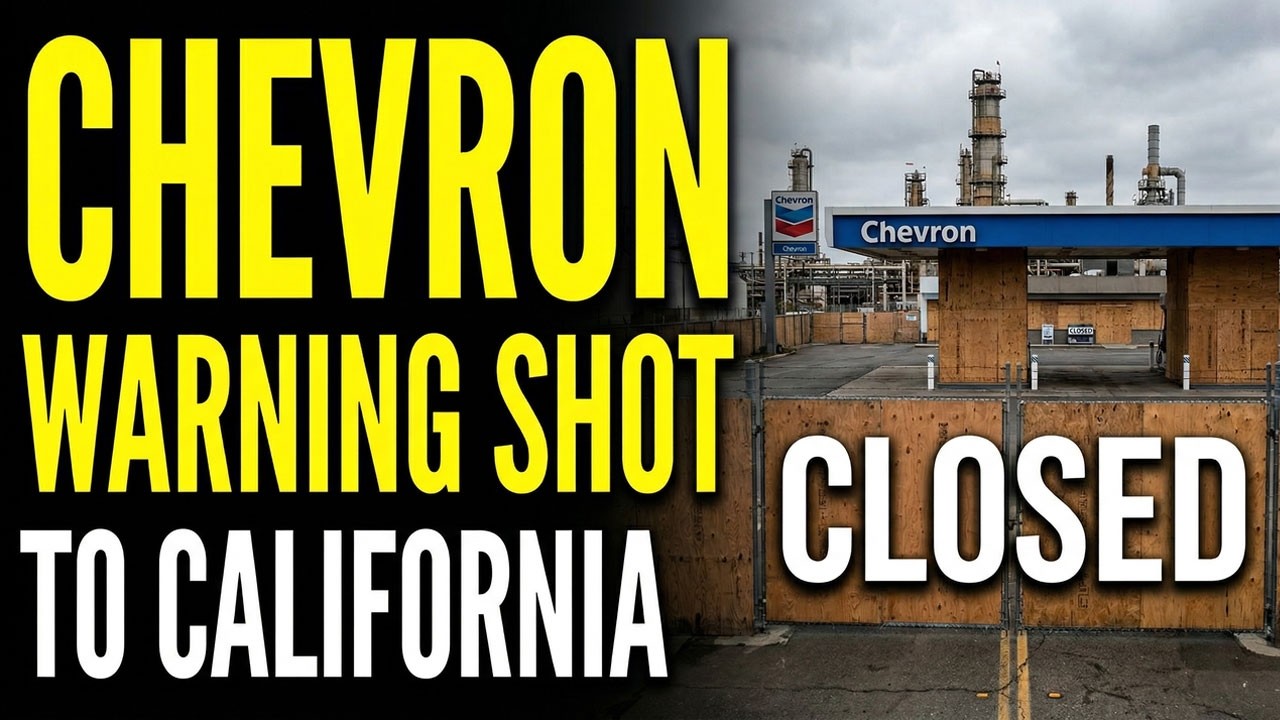
The Chevron California refinery warning is blunt: in a letter to Governor Gavin Newsom and the California Air Resources Board, Chevron said proposed cap-and-invest amendments could drive in-state refining capacity to zero. It is the second such warning in a week, after PBF Energy sent one of its own.
Key Takeaways
- Chevron warned Newsom and CARB of deep concerns over proposed amendments to the cap-and-invest program.
- PBF Energy and Chevron together own four of California’s seven remaining refineries.
- California has gone from more than 40 refineries in the 1980s to just seven today, with Valero’s Benicia plant and a Phillips 66 facility recently closing.
- Chevron said the proposals could “inevitably drive in-state refining capacity to zero.”
What is in the Chevron California refinery warning?
Chevron’s letter voiced strong opposition to CARB’s proposed amendments to the cap-and-invest regulation, formerly called cap-and-trade. Cap-and-invest is a state program that caps aggregate greenhouse gas emissions and forces so-called polluters to buy or sell carbon allowances in an open market. Chevron argues the new rules threaten the survivability of the state’s remaining refineries.
The company also said the regulation would raise transportation and aviation fuel prices, risk significant job losses including high-paying union jobs, and threaten critical energy and national security assets.
Why would California’s remaining refineries close?
Because the math stops working. Refineries in California must buy allowances for emissions above state limits, a cost that passes straight to consumers. Layer on the proposed amendments, and publicly traded companies say they cannot justify the losses to shareholders. PBF Energy and Chevron own four of the seven refineries still operating, so their warnings are not idle threats.
The proposed amendments will inevitably drive in-state refining capacity to zero.
How many refineries has California already lost?
California has fallen from more than 40 refineries in the 1980s to just seven today. Valero closed its Benicia refinery, and Phillips 66 shut another facility. Valero moved up its Benicia shutdown from April 2026 to the end of January 2026, spending about a billion dollars to close it because it saw no viable future under the regulations. This tracks with earlier reporting on Valero’s closure confirming an energy policy disaster.
What happens to gas prices if refining goes to zero?
As in-state production shrinks, California imports more of its fuel, and imports are more expensive and less reliable. The company letters and outside analysts warn gas could rise by more than a dollar a gallon by 2030 from the base price alone, on top of any supply shock. That fits the broader picture of a 42% foreign oil dependence and $8-plus gas looming, and prior forecasts that prices could hit $12 a gallon.
The irony is stark: California, with the fourth or fifth largest oil reserves in the country, is importing refined product from as far away as the Bahamas via Texas, because it will not domestically produce what it needs.
Why does this matter beyond California?
Oil accounts for about 8% of California’s GDP, but it takes that 8% to produce the other 92%, because oil is in everything, from shipping to manufacturing. A refining collapse also threatens energy security across Nevada, Arizona, Oregon, and Washington, all of which lean on California supply. Washington already carries some of the highest gas prices in the country under its own cap-and-trade rules.
Frequently Asked Questions
Who sent warning letters to California?
PBF Energy sent a letter one week, and Chevron followed the next, both warning CARB and Governor Newsom about the proposed cap-and-invest amendments.
What is cap-and-invest?
It is California’s program, formerly cap-and-trade, that caps emissions and requires businesses deemed polluters to buy or sell carbon allowances in an open market.
Why can’t California just replace refineries with imports?
Imports arrive on fuel tankers with no equivalent state emissions cost, so domestic refineries cannot compete, and imported supply is pricier and more exposed to global disruptions.
If California keeps regulating its refineries toward zero, who ends up paying at the pump? Let us know what you are seeing where you live.
Related Coverage
- California Gas Prices Set to EXPLODE as Valero Refinery Closure Confirms Newsom’s Energy Policy Disaster
- California Gas Prices Could Hit $8 Per Gallon as Refinery Closures Expose Failed Energy Policies
- California Refinery Closures Crisis: 42% Foreign Oil Dependence & $8+ Gas Prices Looming
- California Gas Prices Surge Past $5 After El Segundo Refinery Fire – Here’s What Newsom Won’t Tell You
Full Episode Transcript
Read the full transcript of this episode
In a letter sent to Governor Gavin Newsom and other California officials this week, energy giant Chevron expressing its concerns over possible changes to state regulations. >> Valero has got gas stations all across the country, but it’s this refinery that is particularly important to California. >> Refineries are closing, supply is diminishing. They’re setting us up to fail and making sure that imported products will be cheaper and more available to California consumers than in-state production. >> Environmentalists are cheering the shutdown because of the decline of pollution, but the question is where is California going to get its gas?
>> I hear from residents who say, “Why can’t we just electrify overnight?” And the answer is uh we can’t. >> This is not going to be a smooth transition. Every time you lose a refinery, it’s going to be a in a double-digit percent of refined fuel lost in California. >> Ross Allen is a Chevron spokesperson. He says the company is worried about proposed amendments to the state’s cap-and-invest regulations, which set a limit on pollution and forces companies to invest some revenue into cleaner energy. >> Refineries keep shutting down. Phillips 66 in LA, two Valero and Benicia facilities producing 20% of California gasoline, the latest with only seven major refineries left in the state, experts say.
>> Those regulations are created by the California Air Resources Board. They say decades of state policies targeting oil and gas have created a cost and supply crisis with serious consequences, and it’s going to get worse without swift action. >> The new wrinkle though is that uh the state is making stationary sources like uh refineries or other manufacturers purchase uh permits to operate in the state. >> I’m confident that the California Air Resources Board will work with the refinery industry to understand what it is that they are most concerned about to maintain competitiveness against refineries outside California.
In recent years, several oil refineries have left California. And Allen says if that trend continues, the people who suffer the most will be everyday residents. We still consider California home. Uh the problem is that home needs to be comfortable. It needs to be safe, and it needs to be a place that’s welcoming. And California has been none of those things for producers. Suggest late last week we had PBF Energy, one of the refineries that owns two of the remaining seven that are still operational in California, they sent a letter to the state of California and said, “Hey, what you guys have going on, we’re going to have to close down.
We can’t We can’t make a go of it here. This is a no-go.” That was last week, PBF Energy. This week, Chevron. Chevron warns of harm to California’s economy and energy security in letter to Governor Newsom. You’ve got the second letter has been launched. Just You’ve got these energy companies saying, “Hey, it’s a no-go. Can’t make a go of it. No good.” And who who suffers the most? These are regressive taxes because you are shrinking the supply of gasoline and the ability for California to domestically create what it should be able to cuz it’s got the fourth or the fifth largest oil reserves in the United States.
But they they can’t extract any of it because of these green energy policies. But it’s literally just putting a massive crimp in the supply side of oil, gas, whatever products, jet fuel, that California and the West Coast and Nevada and Arizona rely on. So, you now you’ve got you you you’ve essentially got four refineries out of seven with their two related companies, PBF Energy and Chevron, saying, “We can’t continue to play ball California. What do you want us to do? Let’s all read what what Chevron had to say here. This is from the Energy News Beat. I do like this. Democrats and Gavin Newsom stubbornly cling to carbon taxing not because they are true believers but because it’s a revenue generating tax.
Tax and spend. Tax and spend. Man. You know, that just keeps going until it doesn’t, right? It’s like socialism works for those who don’t. Chevron just sent a letter to the California board California Governor Gavin Newsom and the California Air Resources Board warning them of deep concerns. There’s that concern word again and strong opposition to the CARB proposed amendments to the Cap and Invest, formerly Cap and Trade, regulation. So, you’ve got a bunch of proposed amendments going on and the refineries are looking at these and they’re penciling up their numbers going, “Good lord, this isn’t going to work.
We can’t spend this to our shareholders. We’re going to have to shut down the refinery. Going to have to shut down the refinery. They are already bleeding out money. And with the proposed amendments, they’re going to be bleeding out even more money. It’s not sustainable. Does California care? No. No, they don’t. California wants to put all refineries out of business. They they just do. They’ve just got an absolute hard-on to get rid of big oil because, “Oh, the green new deal. It’s so great. It’s going to be the greatest thing ever.” Until it’s not. Until you have $12 a gallon gasoline and we blame it on Trump.
Right? And then what’s going to happen? Proposed regulation will the survivability of the state’s remaining refineries, which will result in California losing the entire industry to this misguided program. So, what you’ve got is you got a refinery that in states like California and Washington state got this cap and trade. So, a refinery emits more into the environment than is allowed by state law. And so, they can buy allotments for the smog they send out. And it’s it it’s basically a cost that gets passed right to the consumer because it’s cost of doing business in the state of California and Washington.
We got the same damn thing. We got Washington state has the third highest gasoline in the country behind Hawaii and California because of just terrible terrible energy policy. It’s just it’s it’s brain [clears throat] dead. They’re they’re they’re absolutely screwing us for literally billions of dollars and they’re telling us, “Oh, it’s only going to be a couple of couple of cents a gallon.” That’s what Inslee told us. No, no, that’s that’s not true. Some sometimes we have the highest gas prices in the country. That is true. So, this regulation will increase transportation and aviation fuel prices for consumers.
They will risk significant job losses, including many high-paying union jobs, while reducing funding for essential public services. It will upend California’s fuel markets and threaten critical energy and national security assets. California doesn’t give a rat’s ass. They’re like, “Ah, deal with it.” Deal with it. Actually, I haven’t heard their response, but this has been decades and decades and decades of deal with it. We’re so green. We’re so clean here in California. We’re destroying the economy, but yeah, and big oil accounts for oil production, all that, accounts about 8% California’s GDP, which is fourth or fifth, depending on the day, largest gross domestic product producing economy in the world if they were their own country.
So, California is massive. 8% of that? Oil. But, it takes that 8% of their GDP to produce the other 92% because oil’s in everything. And even if it’s not specifically in that product, got to ship it, got to get it there, got to put it on an airplane, put it on a truck, put it on a ship. All that’s oil-related, right? All that’s oil-related. So, so, upend California’s fuel market and threaten critical energy and national security assets. Over the weekend, the Globe reported that PBF Energy, we did that podcast, right? Earlier this week, also warned CARB about the stark reality the impacts of the current CARB cap and investment program would have because of the state’s remaining seven refineries.
So, PBF owns two. Chevron owns two. That’s four out of seven. Man. And CARB’s proposed amendments will only worsen the current state of the program, making costs skyrocket further. And these are publicly traded companies, and they’re basically saying, “We can’t do it. So, unless you guys make some changes to these amendments, we’re a hard no-go.” It’s going to have impact. And you know what? We’ve already gone from 40-something refineries in the 1980s down to seven. We just had two close, right? We had Valero close their Benicia refinery. And then we had Phillips 66 close another yet another refinery in California.
I mean, the the list just keeps going on and on. So, it’s not like it’s not like PBF Energy, and it’s not like Chevron are just, you know, throwing out some threats. This is the big warning blow that’s that we’ve got, you know, in the title and the thumbnail. If enacted as written, the current amended proposals the proposed amendments will inevitably drive in-state refining capacity to zero. Zero. These refineries won’t be able to stay in business in California because it’s not feasible to do so. Massive amounts of over overregulation, massive amounts of fines, just a terrible attitude, just overregulation.
I mean, just everything you can throw at a refinery. It’s like this is on purpose. This is on purpose. We want to drive big oil out and we want to make California a hostage to bring in oil in from the Bahamas. And you might say, “Well, that’s pretty absurd cuz the Bahamas are really far east and California’s really far west.” That is literally what’s happening. Going from Houston, Texas, Bahamas, California. I mean, it’s just it’s it’s madness. So, we got the gist of the Chevron’s message to the governor and the Air Resources Board is that California’s economy and energy security cannot survive another refinery shutdown.
Now, we just had two refineries close down, right? And because they are backfilling what normally would come out of those refineries with imports from the Bahamas as an example or from Asia, it’s for I mean, you know, these these oil tankers come in just boom, billowing smoke. And what does California do? Well, that’s not on us. That’s an import, so it doesn’t really count against our carbon emissions program. So, the refineries are not able to compete with the importers of whatever California needs because they can’t produce it domestically. The because there’s there’s no there’s no regulation on the importers.
They cannot compete. The in-state refineries, the few that are left, the seven refineries that are left, and now we’re specifically talking about two refineries, PBF Energy and Chevron, that have said, “We we can’t do it anymore. We’re a no go. Drive in-state refining capacity to zero. None. None.” Kind of like I I talk a lot about and there’s a lot of talk lately about Starbucks and you know, yeah, “Hey, we need $30 an hour barista minimum wages.” And you know, we’ve got the mayor of Seattle protesting Starbucks. Imagine that. Company out of Seattle, the new mayor comes in and protests against Starbucks because “My neck, my back, my paycheck is whack.” Because they’re not getting paid enough, they think, for, you know, pouring coffee.
The inevitable decline can always be to zero. Zero. You know, that’s where this is headed. And I know it won’t get there, but that’s the direction it’s going. I mean, there’s no way to to see around this. You’ve already had how many closed down? 40? 30? Something like that? I mean, the numbers are huge. And now, instead of importing just a tiny little bit of their needs, fuel needs, they’re importing most of it because they can’t domestically produce it because all the refineries have said, “Nope.” Even Valero said, “Hey, we’re making money on this on this refinery and it’s doing okay, but the future of this refinery is done.
We’re going to spend a billion dollars and we’re going to close it down because moving forward, it’s not viable. The regulations you guys have put under us us under this this refinery is not viable. So, they closed that down and they was going to close down it was going to be April of 2026. They essentially closed that end of January 2026. Closed it early because why not? If you can, why not? So, California’s cap and invest program places a cap on aggregate greenhouse gas emissions from businesses and utilities deemed polluters. See, this is all it’s all just virtue signaling by California. And what is it really doing?
Is it really cleaning things up? No, it’s not. It’s all just delusion. >> [snorts] >> This clean energy thing is just absolute delusion. It’s you know, the the the climate pledge arena of which I will be going to tonight. I’m going to go see a Kraken match. Climate Pledge Arena. You talk about virtue signaling. It’s so annoying. It’s so annoying. You know what I mean? Just Talk about the opposite of Oklahoma City. Oklahoma City has the Devon Tower which is just a massive massive tower right next to Paycom Arena in downtown Oklahoma City. And at the top of this massive tower which is an energy company, Devon Energy, he has the Thunder.
The Thunder’s got this, you know, cool Thunder, you know, logo and it it it blinks on and off. And instead instead my hometown, my old Sonic’s playground, climate pledge. We’ve got to pledge to the climate. What a bunch of virtue signaling because in California’s case, you’re literally bringing in your energy needs on a smoke billowing oil tanker. Make that make sense. You see it billowing. I mean, we all share the same air, right? China, United States, California, Washington, one planet. And it all goes up into the air, right? Ask India and ask China how that’s coming for them. Hey, how’s your climate pledge arena coming?
They’re like, right? Air Resources Board issues carbon allowances and businesses are forced to buy or sell in these open markets. And what they’re saying is, yeah, with what you guys are proposing moving forward, no go. CARB continues to push for more stringent regulations and taxes on California businesses and taxpayers and lie that the goal is a reduction in greenhouse gases. You know, none of that’s been proven. It’s It’s It’s not a reality. It’s just another big tax on business. Great. That’s fantastic. One of my earlier podcast today was Starbucks is moving out of Seattle and going to Tennessee, taking one other corporate divisions.
You know, and and that is the it can always go to zero. Always go to zero. You can have no refineries in California. And then you can import everything. And then when you have some small hiccup, gasoline goes to 12 bucks a gallon, 15 bucks a gallon. That’s if you can get it. And it’ll impact Nevada. It’ll impact Washington. It’ll impact Oregon. It’ll impact you know, everywhere. Everywhere. Oil and gas and energy producers warned that the CARB’s latest proposed regulations will increase costs on all refiners and will devastate the energies the state’s energy economy. Yeah. These are not idle threats, right?
Th- These are just a reality. They also go on to say that gas is going to be more than a gallon by 2030 as a result. They’re just looking at the tiny in little incremental changes and not just to the refiner, which are apparently enough where they’re willing to close down, but to the consumer. They’re saying it’s it’s going to be a buck a gallon more by 2030. So, in four years, it’s base price going to be a buck a gallon more because the refiner is going to have to you know, it’s going to have to push that cost on the consumer. They can’t continually go back to their investors and say, “Guys, we’re not making money, but we’re just going to keep her open, you know, in the hopes that someday it will.” Because what you’re seeing is a steady downward decline of the number of refineries in California.
And this is one of those regulation pieces where Gavin Newsom literally needs to pull his head out, but he won’t because he’s got a campaign on that green, green, green energy. It’s It’s It’s mind-blowing how just bullheaded this is without an obtainable goal on the other end and without any real, measurable you know, goals being obtained. You got nothing. You’re just making people poorer cuz they got to pay really expensive gasoline. So, we’re doing in Washington state as well. Just some really, really expensive gasoline that doesn’t need to be. Here’s that letter. I’m not going to read it. It basically just states what I already told you about.
And I thought it was a little bit less threatening than the PBF letter. But it got the message in there that, “Hey, moving forward, this is this is not sustainable. We can’t keep doing this. So, you guys need to make some changes to your proposed amendments, otherwise we are going to take our toys,” in other words, their refineries, and go home. Just close them out. Just no go. And you guys, good luck with that, you know, gasoline, jet fuel, propane, all that all that stuff. Good luck with that cuz we’re not we’re not going to make any more of it for you in state. You have to bring it all in from who knows where.
The Bahamas. Ugh. It’s virtue signaling at its finest, right? With the end result just being terrible, terrible for the for the not only for the consumer, but but for just the the business market in general. I mean the F about getting oil to you know, refined stuff to California is like you doing what for what? Oh, well, because we’re we’re so green. We’re we’re so clean. We love ourselves so much. We can virtue signal to the world. And yet they have the highest gas prices in the country. That’s bottom line, right? Is this is screwing the people of California? And the the government regulatory bodies don’t care because everything’s all just over.
We’re virtue signaling, you know, we’ve got the climate commitment act and we’re committed to the climate. Here in Seattle, we’re committed to climate pledge arena. So terrible. It’s just so dumb. Cuz none of it really has a lasting impact. It’s not really doing anything. It’s kind of like all the numbskulls going out there, no kings, no secret police. You’re like, yep, still no kings, still no secret police. Good call. You guys are guys are really making a point here. You guys are really laying down the facts. Now, Chevron and PBF Energy just laid down the facts and it doesn’t look good, but we knew this was coming.
Where’s it going to go? Don’t know. Higher gas prices? Make sure you subscribe, hit that notification bell. I’ll see you in the next episode. Thanks again for joining. Bye for now.


