
Watch the full episode in the player above — everything in this article comes straight from the episode.
Prefer audio? Listen to the podcast version:
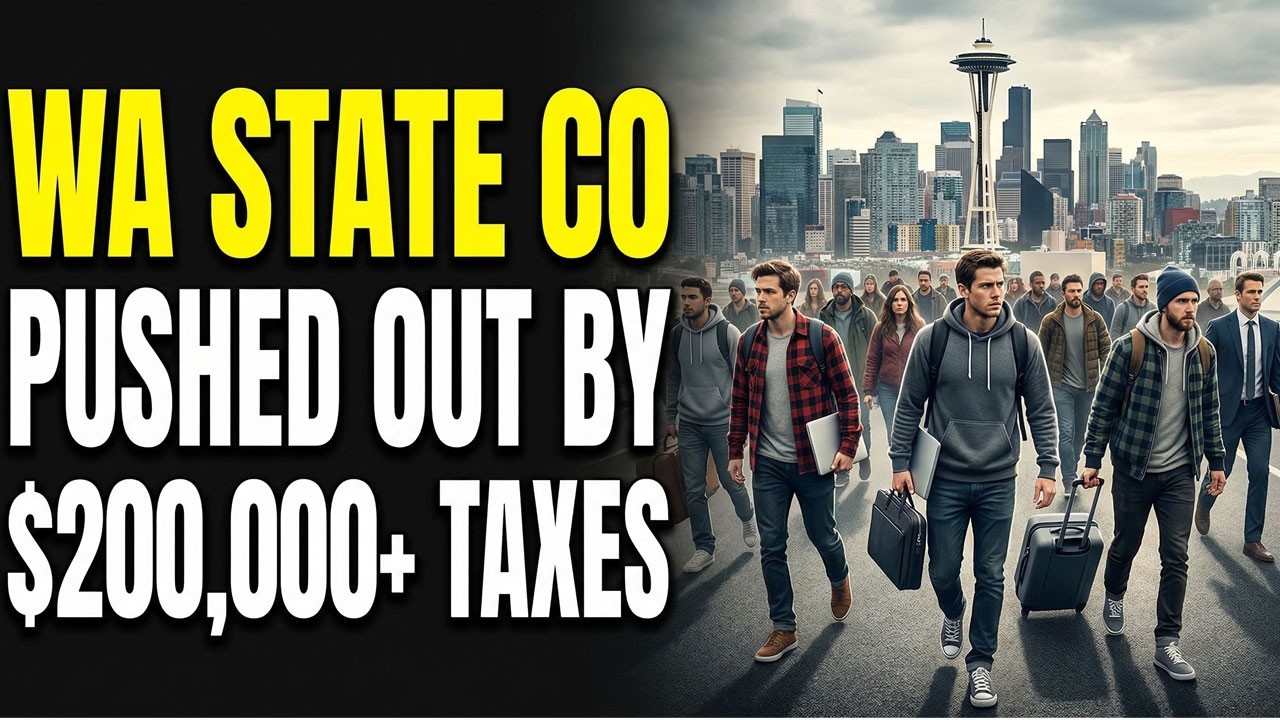
The Washington business exodus just got a concrete example: Seattle photo-tech company Moment is moving its headquarters and remote team to Wyoming, with CEO Mark Barros citing a stack of state and city taxes that made staying unworkable after 40 years. A new tax on digital advertising alone added roughly $200,000 in annual costs overnight.
Key Takeaways
- Moment is relocating its headquarters to Wyoming, where incorporating cost just a few dollars.
- A new state sales tax on digital advertising added about $200,000 a year in new costs.
- Washington’s new 9.9% tax on income over $1 million is headed to the governor’s desk.
- An Association of Washington Business survey found 44% of leaders considering moving their homes; those considering moving businesses jumped from 9% to 17%.
Why is Moment leaving Seattle?
Taxes, stacked on top of each other. Barros said that even though he isn’t a millionaire affected by the new millionaire tax, “when you add up all the cost to run a business in Washington, we can’t afford it.” He listed Seattle’s 10.5% city taxes, city property taxes, state capital gains and estate taxes, and state and city business and occupation taxes.
Because Moment is largely an online company, it can restructure without much friction. Barros is keeping the business but running it remotely, building a team and moving the headquarters to Wyoming to shed Washington’s and Seattle’s tax load.
What is the digital advertising tax that hit Moment?
A business exodus often starts with one line item, and for Moment it was the removal of the state sales tax exemption on digital advertising. That change, which started this year, turned into roughly a $200,000-a-year tax that did not exist the year before — even applying to ads the company runs overseas in places like Germany.
That’s the detail that stings: the tax isn’t based on where the ads run or where the team sits. If you’re incorporated in Washington, you pay it. This is the same tax-driven pressure documented in Seattle’s accelerating tech layoffs.
Overnight, it’s a $200,000 a year tax that did not exist last year.
How bad is Washington’s tax picture for businesses?
Layered and, in some cases, applied to gross sales rather than profit. The business and occupation (B&O) tax is paid as a percentage of sales, which crushes thin-margin operations — a grocery store might do $3-5 million in gross sales but make only thousands in profit, yet still gets taxed on the big top-line number.
Then there’s the sales and use tax change Barros called the real killer. It used to apply mainly to physical goods; now it hits 100% of items a business buys, including digital services and subscriptions like Shopify, Amazon Web Services, and Google — at roughly 10%, no matter where team members are located.
What is Washington’s new millionaire tax?
A 9.9% tax on every dollar of household income over $1 million, headed to the governor’s desk. The governor defended it, saying it would apply to less than half of 1% of Washingtonians while making life “more affordable for millions.”
Washington currently has no traditional income tax, so this is a significant shift. The new income tax is scheduled to take effect in 2029 — but as Barros put it, the writing’s on the wall now, and business owners aren’t waiting. It’s the same math that had a CEO reject an entire state.
Is this really an exodus, or just talk?
The data points the same direction as the anecdotes. An Association of Washington Business survey of about 400 businesses found 44% of leaders considering moving their personal homes to places like Arizona, Idaho, Montana, or Wyoming. The share considering moving their businesses nearly doubled, from 9% to 17%.
Bigger names are already shifting: Starbucks is expanding corporate operations in Tennessee, Microsoft has closed some Seattle offices, and Amazon has pulled back Washington expansion. Downtown Seattle’s office vacancy rate topped 30% in a recent three-month stretch, tied directly to rising local business taxes — the same collapse behind Seattle’s soaring vacancy rate.
What is “lifestyle arbitrage”?
It’s the move behind the numbers: relocating from a high-cost, high-tax market to one with a solid business climate, low taxes, and cheap housing — and pocketing the difference. Barros pointed to housing math, noting that buying a median-priced home in California can require around $222,000 in household income.
The classic example is In-N-Out Burger moving headquarters toward Tennessee, partly so mid-level managers could actually afford homes. It’s the same pressure behind Seattle’s payroll tax disaster.
Frequently Asked Questions
Where is Moment moving?
Wyoming. The CEO said he incorporated there for just a few dollars and is running the company remotely to avoid Washington and Seattle taxes.
How much did the digital ad tax cost Moment?
About $200,000 a year — a cost that did not exist the prior year, applying even to ads run overseas.
When does Washington’s new income tax take effect?
The 9.9% tax on income over $1 million is scheduled to go into effect in 2029, though business owners are reacting now.
If a small, beloved local company can pack up and run entirely from Wyoming, what’s stopping the next hundred from doing the same? Let us know in the comments.
Related Coverage
- Seattle Tech Layoffs Accelerate as Washington Millionaire Tax Push Drives Business Exodus
- Seattle’s $47 Million Payroll Tax Disaster: Business Exodus Leaves City Budget in Crisis
- Washington Millionaire Tax: Why SB 6346’s 9.9% Rate Will Destroy the State Economy
- Chicago’s $21 Per Employee Tax: How Brandon Johnson’s Business Exodus Policy Will Destroy the City
Full Episode Transcript
Read the full transcript of this episode
And tonight, a recent survey conducted by the Association of Washington Business shows a growing interest in moving businesses and primary residences out of Washington state. How much do they want to tax millionaires? They want to tax 9.9% on every dollar made over $1 million and it’s going to happen. The bill is headed to the governor’s desk and he said, “quote, the millionaires tax will apply to less than 1/2 of 1% of Washingtonians, but make life more affordable for millions. I look forward to signing it.” >> That survey part of a quarterly review of about 400 businesses and during this most recent survey, many respondees decided the state’s rising tax burden and other cost pressures as the cause of declining economic confidence.
Washington doesn’t currently have a traditional income tax, but that changes once this is signed. Opponents say this is a job killer that’ll drive businesses and hurt the state as a whole. A major brand is expanding its corporate footprint right here in Middle Tennessee. >> Yeah, Starbucks says it plans to open a new corporate operations office right here in Davidson County. Last year, the state of Washington imposed an additional 0.5% business and occupation tax on companies with more than 250 million in taxable income annually. There were also new taxes imposed on large tech companies.
It’s going to be tragic for for our economy and for our businesses especially. The state income tax will give our business nowhere to escape unfortunately and so they’re going to start most likely moving out of state. We’ve already seen Starbucks start moving to Tennessee. According to that survey, 44% of business leaders said they were considering moving their personal homes places like Arizona, Idaho, Montana, Wyoming. Microsoft has closed some of their Seattle offices. Amazon has shut down expansion in Washington. Um so it’s yeah, where it’s it’s very concerning for for my business perspective.
Employers considering moving their businesses jump from 9% last year, last survey, to 17% this time. Talking about a company called Moment here in Washington state, in Seattle. They’re kind of down by there where the old King Dome was. It’s a company that’s it’s not a huge company. I think it only had eight, maybe a dozen employees, something like that. I think somebody had said that uh LinkedIn page said eight employees. But they had a significant presence and I have used their products. I used a um it was a cell phone cover. So, where’s my phone? Uh it’s somewhere over there. Cell phone cover that has a lens on it.
That was a wide-angle lens and I believe I used some of that to shoot footage of Choppin Chaz back in the day. Um it one of those things. I was like, Moment, that’s a great lens and it comes on a cover. So, Moment has basically said, the CEO has said, “Hey, I’ve been here for 40 years. Got to go.” And with all the taxes that Washington state and specifically Seattle is charging, by putting together a remote team and just moving the headquarters to Wyoming, he’s going to he’s going to absolutely minimize all the ridiculous Washington state taxes and on top of that, Seattle specific taxes. Let’s read the article.
Here we go. Businessman Mark Barros says he left Washington and is taking a Seattle-based company with him because taxes have become too burdensome. Barros posted on accidents, “Not even about the millionaire’s tax by the Washington state legislature last week, which placed a 9.9% income tax. We know all about that with households more than a million bucks. I’m not even a millionaire affected by this tax, but when you add up all the cost to run a business in Washington, we can’t afford it,” he said. “Businesses can’t afford it and they are leaving and they are leaving in droves. And I am one of those individuals moving my primary residence.
Will I remain a business owner in Washington state? Yes, I will. Will I remote run it remotely from elsewhere? Yes. Correct. And that is going to happen to businesses that are specific location specific. And then real estate sales company is real location specific. So, don’t have a lot of options there, but I have the option of where I can live. And I ain’t going to live here anymore. It’s go time. It’s go time. You can build here here’s the here’s the whole thing that really got me into this this story line. You can build a remote team and reopen in Wyoming removing all of these costs. Just boom.
That doesn’t even have to be doesn’t have to be Texas. Doesn’t have to be Florida. That doesn’t have to be Nevada, Arizona. Those have all been pointed out as as low tax or or the Carolinas. You know, low taxes. Low taxes. Wyoming. Why not? Doesn’t matter where it is as long as it’s away from Washington and it’s away from Seattle. Bros did not say in the post when he moved out of state, but said his photography equipment business company called Moment. No, it’s not Moment. It’s called Moment is moving this month. Bros did not reply to emails seeking comment cuz he’s too busy moving. He’s out the door.
He’s got one foot out the door and he may have already left. It’s unclear how many employees, but Washington state and uh eight in Washington state and six in Seattle. Okay. I don’t know if that’s 14 or eight total. But not a huge company, but if you’re into photography and if you’re into video, Moment has some cool products. They really do. They’re like they’re like one of those those small companies you’re like, “Wow, this has big big impact to video creation and it’s done by a small team and it it’s really well done. It’s it’s good stuff. I believe in the company and I remember thinking, well, okay, yeah, I’m going to buy from Moment because I’m buying local and I always support that.
And now I’m in a position where I’m like, yeah, move out of Seattle. Yeah, I’d buy from you in in in Wyoming because ultimately the consumer doesn’t really care where the company is located as long as they get what they want, which is quality of goods, customer service, does the damn thing work? And Moment does. So, I don’t blame them for moving. I mean, this is this is the inevitable result of leadership in Washington and in Seattle just absolutely taxing things to the hilt and pushing people out, right? Among the taxes Berio size sites are the city taxes of 10 and 1/2%. Yep, not great. City property taxes, state capital gains and estate taxes, and state and city business and occupation taxes.
How about just the cost of gasoline here in general? Guarantee it’s a lot cheaper in Wyoming. You know what I mean? Just like, uh, just night and day, night and day. He also said that removing the state sales tax exemption on digital advertising. This has been a big one. This has been a big one. State sales tax exemption on digital advertising which started this year has become very expensive for his company. And that is how I would have seen Moment. I I would have been searching through videos for hand taking video on my phone. I’m you know, I’m I’m down at Chaz and Chaz doing whatever. You know, chasing around some Antifa, yeah, just ninnie and um I I want to get a better angle on what we’re doing here or I want to get a zoomed in angle or whatever it was that I was doing.
But it was one of those kind of deals and then their advertising, you know, fills your stream and you’re like, ah, I got to buy from Moment. And that’s how it’s done. So, his business is even being taxed for ads it’s running in Germany. Overnight, it’s a $200,000 a year tax that did not exist last year. And that’s where leadership gets it wrong thinking, “Well, we these people can pay taxes. These are businesses. They can pay taxes. If you’re running a couple million in advertising, what’s a couple hundred thousand in taxes to Seattle? Cuz Lord knows we need the revenue.” That’s what this is all about.
Decades and decades and decades of terrible leadership and unbridled spending, and now you got a situation, “Good heavens, where are we going to come up with the money? All right, let’s do this. $200,000 a year in additional taxes for a small company, and the small company just basically goes, “We can’t do it.” I remember we got taxed by Washington State Department of Revenue for What was it? On the rental income side, it was our appraisal subscription service for our software. And they weren’t charging us taxes, and we had to pay all the Washington State taxes. We didn’t know. And I It’s Are you supposed to know?
Yeah, have you watched or looked at tax code for I don’t care if it’s Wyoming or or Washington or Seattle. You looked at tax code and gone through that and really identified what you should be paying and paying and not paying? Nah. If they don’t charge you a tax, you say, “Okay, this is the cost. Must not have to pay tax.” We got hit retrospective um retroactive for I I I want to say it was 4,500 bucks. The The tax agent was okay, but you know, it’s like, “Really? You’re going to hit us for that?” “Oh, yeah, we are. We are, and you you’re lucky we don’t hit you for more.” I’m like, “Ah, this sucks.
It sucks. To pay taxes sucks. Because you know what? It’s going to a bunch of stuff that I don’t approve of. Just a bunch of nonsense here in Washington state. Just homelessness. Oh, let’s build some more, you know, let’s build some more tiny homes. Oh, cuz that’s working so well. Yeah. Again, it’s not even based in where your ads run or where your team is. Incorporated in Washington state, you will pay this tax. 100% 100% And we get hit with some of those taxes and some of it will continue to get hit with those taxes. It’s inevitable. But there’s no work around. You know, I mean, I could I could move a real estate brokerage to Oklahoma City, but then you’re starting over.
And I’ve got something that can be run remotely and that’s what we’re going to do. Going to run it remotely. I’ll be in Oklahoma City. I’ll be your designated manager in Oklahoma City. And we rarely have people come into the office anyway. It’s all done via telephone, email, video. People watch videos. Summer Properties Northwest, we’ve got just a ton of videos on there. I’ve gone through all the MLS forms. I mean, if you want to put yourself to sleep, go ahead and watch that kind of stuff. So, yeah, how about how about this? While there’s no evidence yet that millionaires and businesses are planning to flee the state in large numbers, Baro’s Post highlights concerns from some in the business community that there will be an exodus of millionaires, billionaires, and their companies from Washington.
It’s happening right now. I mean, everybody is is sounding the warning. That’s the words. Sounding the warning. We’re going. Seattle attorney Joe Wallin said the new income tax scheduled to go in effect in 2029 will definitely cause some businesses to leave. No, it’s happening now because the writing’s on the wall for anybody who’s a business owner, the writing’s on the wall. Even if they don’t get the millionaire tax now, it’s coming and this is just a indication of where things are moving forward and it’s not in the right direction. So, Wyoming, here we come. You know, something along those lines.
And And there’s quite a few states that have a much, much lower tax burden now. I mean, Washington state is just It’s It’s played its way out of the game. They’re like, “Ah, we don’t really want to be involved here anymore. Let’s tax them even more.” Talk tax them even more. While I would say even if companies want to leave, it’ll not always be practical given investments in office, manufacturing, warehouse space. Yeah, if you’re all in and you got millions of dollars in, you’re not going to pick up and leave. Cuz you’re starting a brand new business. But you know what? For other companies, they’re able to do to to do this, to run operationally from a different state, we’re going to do it all day long.
Going to do it all day long because it makes sense and we can do it and we’ve got the technology. While one of the representative startups in this practice opposed the income tax bill and testified before it against the legis in the legislature. So, office vacancy rate in downtown Seattle more than 30% in the last 3 months. He said that John Scholes talked about it directly attributable to an increase in local taxes on business. Now, yeah, Moment DC ditches Seattle after 40 years says taxes and digital ad tax added 200K in costs overnight. Like that. Just boom. Ah, they won’t see this coming. Well, well, let’s go ahead and tax all these wealthy business owners because you know what?
Socialists don’t care. Socialist Where’s my my coffee cup? You can get this in the merch. Socialism works for those who don’t. Is that level? Can you see that? Yeah. And this is so true. It’s so true. Socialism works for those who don’t. And that’s That’s That’s kind of how this game goes, right? Here is Here’s that ex-post from the owner of Moment. So, here he gets into Washington is just too expensive. Personally, you’ll never pick Washington to start a company. 100% there’s going to be zero business development in Washington state. Gas taxes, some of the highest in the state, and we also have the third highest gas consistently in the country behind Hawaii and California.
Sales tax, property tax, capital gains tax, estate tax, housing prices, food costs. Food costs are unreal. Just visit a Seattle restaurant or grocery store. I mean, even just coming from Bellevue, you you’re like, “What? How much are we paying here? What?” And the difference is is it’s cost more to do business in Seattle. So, even though I drive over a few miles over to where my boat is in Seattle, and say I want to do a little dinner over there, I go to a grocery store, if you can find one without a whole bunch of homeless people roaming around out in front, “Ah, you got any change from your next fentanyl hit?” No, I don’t.
Get out of my way. I’m going to the store. I need to get some food. Get out of my way. Right, you got to do that number in Seattle just to get to a grocery store. Who wants to do that? I don’t. And then on top of that, pay more for your groceries. It’s It’s just like this, “Why would I do this? Why Why would I want to do this?” And then from the business side, the Moment CEO goes on to say, “Very little capital,” which I thought was interesting. Great angels, but almost no VC or larger funding sources here in Washington for Seattle and for Washington. Super high salaries for tech talent. This has changed.
It’s coming down, but Amazon, Microsoft, whomever else paid very high rates for a very long time because that’s what it took to attract talent here. It was so competitive. Now that that’s easing off, those numbers will come down, but not in time for anybody who want to run a business here. The B&O tax is paid as a gross percentage of your sales. And you know what? So many businesses run on a tiny thin margin, little little margin, like a grocery store. So they may have three, four, five million in gross sales, but they’re going to make a fraction of that. They’re going to make just thousands of dollars in profit.
They’re not making this, but you know, Washington state, just now let’s go ahead and in Seattle, let’s go ahead and hit you as a percentage of your sales. Because it does and that doesn’t take into a consideration offsetting any of your expenses. It’s just like, oh, there is the big number, let’s tax you on that. And that’s what they do. Sales and use tax, this is the real killer. It was the sales and use tax that he talks about um that that is just terrible. What pushed us out moment out was the recent change to sales and use tax. It used to be paid on this tax on physical things you bought for your business, similar to sales tax.
And that’s kind of what I was explaining. I’ve got this subscription for our appraisal software. It’s not a real thing, it’s digital, right? It’s online. You download it. Now you pay it on 100% of the items you buy. Think Shopify, Amazon web services, Google, etc. You pay it on everything cuz they want to tax you cuz they need the revenue for all their pet programs that have zero positive impact on business or basically anybody else except for those who don’t work. Even if your team is remote, you pay 10% sales tax on 100% of these purchases, no matter where people are located. So it’s you know, you’re taxing the business not the location.
It it doesn’t matter where you’re located If you’re still in doing business, so guy goes on to say, “Hey, I cranked up a company in Wyoming for for literally just a few bucks, incorporated there, and now we’re going.” And now he’s avoiding all of those taxes. And if you are primarily an online company, why wouldn’t you do this? It makes absolute sense. So, I think right now we’re in the front end of most businesses kind of rethinking how they want to do things. Even if it’s a matter of you got a business, you know, you have here, maybe you have somebody, you know, in in wherever wherever cheaper state, cheaper wages, working cheaper on your business, and you pay the bare minimum of all the taxes you need to, but you leverage, “Hey, we got no rent in expensive Seattle.
We’ve got, you know, we don’t have to pay gas there cuz nobody’s physically there.” You know, you go through all these things of taking the physical structure out, creating it somewhere else, and even if your business, you know, has to be, you know, located here, whatever that is, maybe you just have an identity package, you know, something something along those lines cuz not all businesses are going to be able to leave, but they’re going to apportion their, you know, workforce and their resources and everything else they need for their business accordingly. It’s, you know, I I call it the whole housing thing is is so expensive here and most employees cannot afford a home.
What is it? I think 15% of people in California can afford a home. Requires $222,000 in income for a household to be able to buy a median priced home in California is just it’s not doable. It’s not doable. But like In-N-Out Burger moving its headquarters from California to Tennessee and one of the primary reasons was their employees at management level making 50 60 grand whatever that might be 70 grand are able to afford a home and even their other employees can afford a home there. They they can do it because the numbers are so different. So that is the lifestyle arbitrage component of it is that if you’ve lived in a high expensive you know high high valued housing market and you’ve built up that appreciation or you just looking to get your first home go to a location go to a place that has a decent business outlook low taxes and super cheap housing and that’s what you do.
That’s the lifestyle arbitration arbitrage. You know why I keep saying arbitration? Arbitration’s brutal. Ever been through that? No, thanks. Hard pass. Well, we’d like you to do this. I don’t want to. Well, we’re going to have to come to a compromise. Just it’s stupid. It’s it’s silly. Just Yeah, go to trial and spend your hundreds of thousands of dollars and you know have a judge decide. No. Something like that, you know. But that’s different. What we’re talking about is people moving out of Washington state specifically out of Seattle and we’re going to have stories on this for days months years.
Make sure you’re subscribed. Hit that notification bell. I’ll see you in the next episode. Bye for now. >> Hey.


